


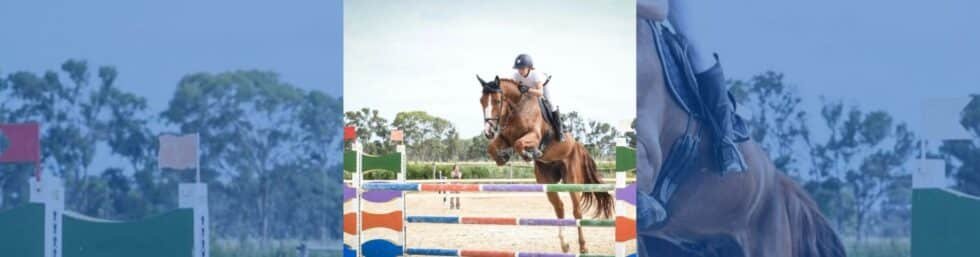
Cristina Zabala is an example of how passion and perseverance can open unexpected paths. Although her academic background seemed to lead her away from the world of horseback riding, fate had other plans for her. From a young age, Cristina was always drawn to the world of horses, even though she didn't come from a family involved in equestrian sports. However, "old habits die hard," and her love for these animals led her to Italy, where she completely changed her life and the lives of many young horses.
Working with young horses isn't easy. Cristina emphasizes that the biggest challenge she faced wasn't the horses, but the people. "I had to unlearn many traditional methods and find my own way. I realized that if the foal didn't enjoy the process, everything became more complicated," she tells us. "You have to be open-minded, quick-witted, intuitive, and above all, most importantly, I would say, you need a lot of emotional stability. It's crucial not to take the horse's reactions personally. Ignorance breeds frustration, and frustration can lead to anger, which is counterproductive." Furthermore, she advocates for an approach similar to natural horsemanship. Her goal is to apply respectful techniques without losing sight of the demands of high performance.
Thanks to the freedom she enjoys in her stable, she can explore alternative methods that allow her to work with horses calmly and effectively. She surrounds herself with professionals like Paolo Torlonia, Gabriel Pellicer, her "spiritual guru," Elena Cortés, and Abel Muñoz, who have provided her with advice and support in her development as a rider and trainer of young horses.
Cristina's work is varied and depends on the horses' physical and mental condition. "I do long rides through the countryside, flat or jumping work sessions, and I always reserve the afternoons for breaking in and leading young horses," she explains. Adapting to each horse's needs is essential for their well-being and progress.
Cristina emphasizes that the way a foal is broken in greatly influences its future athletic performance. “I’ve worked with horses that compete at a high level but have irrational fears due to poor initial training,” she says. Her philosophy is simple: to make the process safe, calm, and enjoyable for both rider and horse. “Sedating young horses to ride them or even lead them has become normalized. We’ve all seen someone hit a horse to get it onto a trailer, heard whip cracks in a stable, whether professional or not—it doesn’t shock anyone. I’ve ridden horses that could run 1.50 meters, but couldn’t enter a track without German reins and in reverse. I see wonderful horses that their riders can’t mount or take to the field, can’t turn out in a paddock, can’t get them together with other horses… These are unnecessary risks created by humans that make the horse’s life very unnatural, or I would even say very unhappy.”
Cristina has achieved spectacular things with young horses; however, her greatest satisfaction is seeing horses that were once afraid of humans regain their confidence. “I’ve also participated in the Italian Young Horse Championship, but to be completely honest, my greatest achievement is making the production of sport horses safe, calm, and enjoyable.”
Now, with her first international competition just around the corner, she faces a new challenge with Bughi Bughi del Terricio 7y/o, a horse she has trained herself since he was four years old. “The vets said he didn’t have much of a sporting future, but here we are,” she says proudly.
Cristina Zabala is a clear example that, in the world of horses, with patience, respect and love, there are no limits and above all, that modern dressage models for young horses are totally compatible with high performance.