






Photographer Manuel Naranjo Martell dedicates «Saca 1504» to the donkeys of Doñana, guardians of a horse riding knowledge three centuries before the most luxurious house linked to the horse
By Santiago Rodríguez
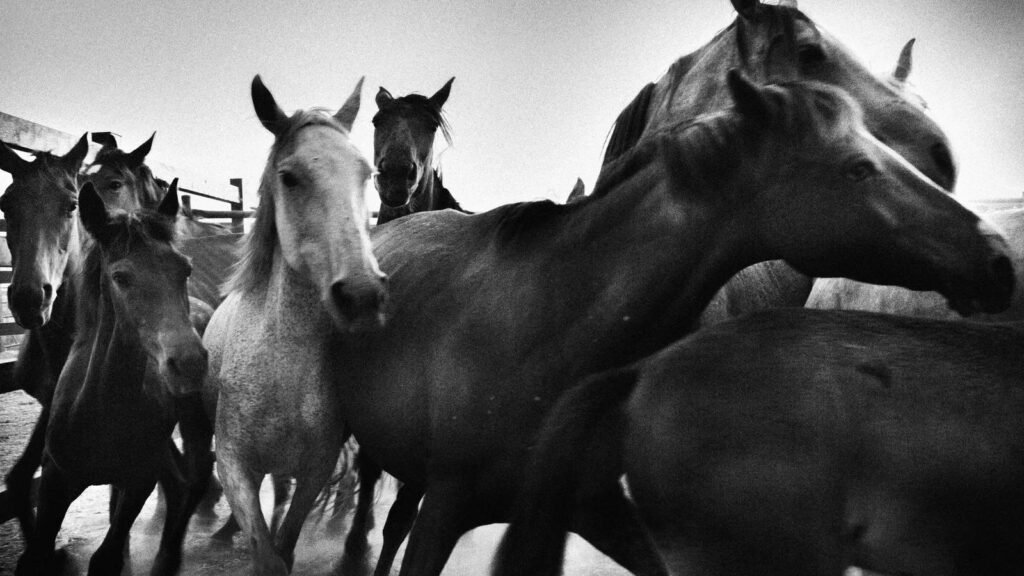
On the night of June 25, no one sleeps in the marshlands of Doñana. The yegüerizos from Almonte have entered the National Park with their horses, their equipment, and their food supplies, and they wait for dawn by the candela, with the humidity soaking into their bones. When it clears, they saddle up and head out to find the marshland yegües that have spent the year in freedom. They surround them and group them with the chivata, a stick that in their hands seems an extension of the arm. The troops grow as the morning progresses. This year there were nearly 1,600 yegües and potros, divided into eleven troops. They passed through the Rocío Hermitage to receive the blessing and entered Almonte with the fall of the evening.
It is the Saca de las Yeguas, and it has been done in this way with few variations for more than five centuries. The Duke of Medina Sidonia regulated it by decree in 1504, but the custom dates back to the time when the Marisma livestock was inherited from Al-Andalus. In Almonte, the yaks spend a few days in the livestock enclosure, where their fur and tail (the tusa) are cut off and the mares are saddled. After that, they return to the Marisma until the following June.
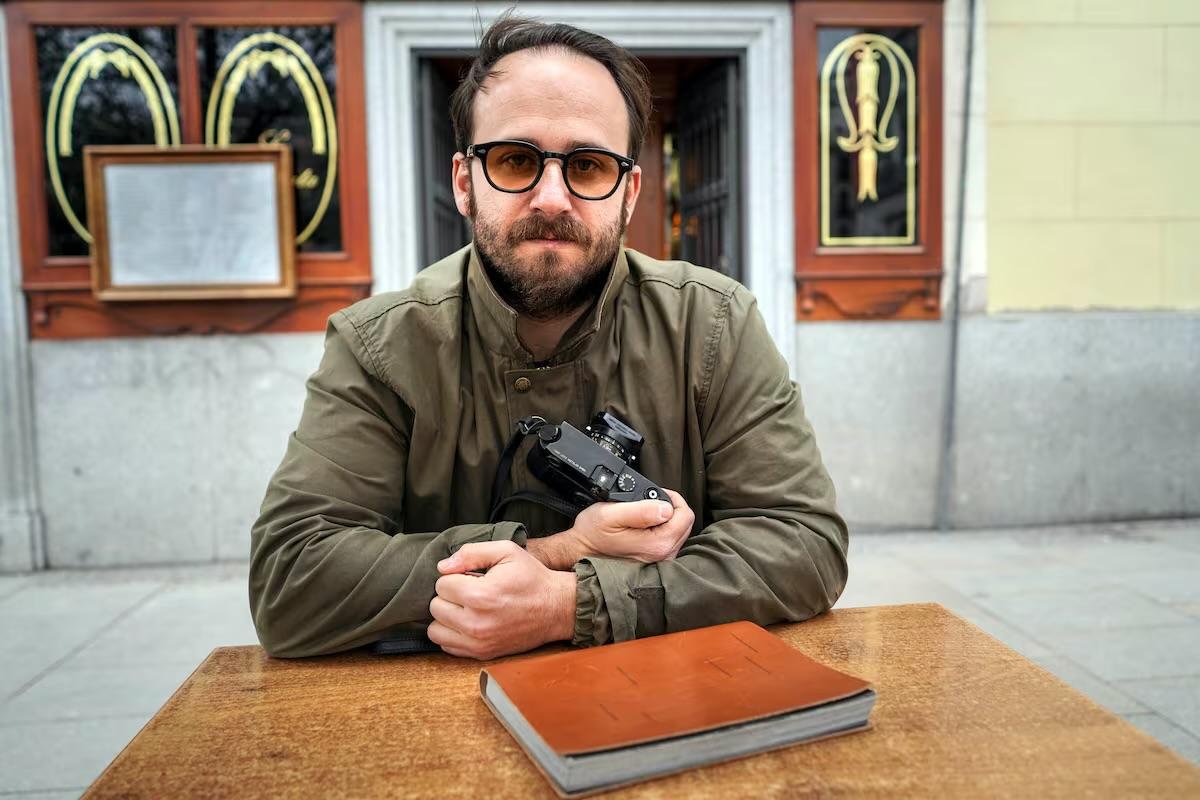
Manuel Naranjo Martell (Seville, 1988) has been accompanying these men since 2016. The result is Draw 1504, published this summer by Editorial RM: almost two hundred pages of black and white that do not seek the folkloric postcard, but the ritual that lies beneath. Its thesis is ambitious and convincing. The yegüerizo would be the founding rider of an Atlantic world, the root from which the Mexican charro, the Venezuelan llanero, the rioplatense gaucho, and the American cowboy emerged. Through the Guadalquivir, horses and the way of handling them left for America. The book concludes with the Atlantic seen from the beaches of Doñana, looking to the other side, towards the author’s motherland.
There is another house that made the horse the origin of everything. In 1837, Thierry Hermès opened a workshop in Paris to make harnesses for carriages. His first bag, the High with straps, Born in 1900, so that riders could carry the saddle. Today, its emblem is a carriage with its horse and a waiting groom: the one driving, the house says, is the customer. Its saddles are still hand-stitched, stitch by stitch, by artisans who learned the craft from other artisans.
It is worth putting the dates into perspective. When Thierry Hermès cut his first bridle, the stallions of Almonte had already been producing mares from the marsh for 333 years.
What unites the two is not luxury, but the way of preserving knowledge. Neither the Parisian silversmith nor the yegüerizo learned their craft in a book. One carries it in their hands and the other in their bodies: knowing how to read the water of the marsh, guessing where a mare is going to break, where to place the horse so that the herd doesn’t break. Both received it from a master and both transmit it in the same way, slowly, to those who prove worthy of it.
The difference lies in what each person did with that knowledge. Hermès turned it into an object, a brand and a waiting list, and today it sells the memory of the horse to many who will never ride one. The horse has nothing to sell except a June day, and perhaps that is why its craft has come intact to us. It has not been polished by any showcase.
In its original sense, luxury is the rare, the thing that cannot be manufactured at will. Few things are more rare today than a craft that remains exactly what it was five centuries ago. A bag can be commissioned, although it has to wait for years. The dawn in the marsh with the troops marching is not something that can be bought: one has to have earned the spot.
Naranjo Martell understood this and had the patience to watch it for a decade. Before Hermès, before the gaucho and the cowboy, there was the marisma. And it still exists.
By Santiago Rodríguez
The world of horses brings people together.
Our favorite animal is the emblem of many brands, and, as far as Chacco Marketing is concerned, it is the link that unites interesting people, people who add value.
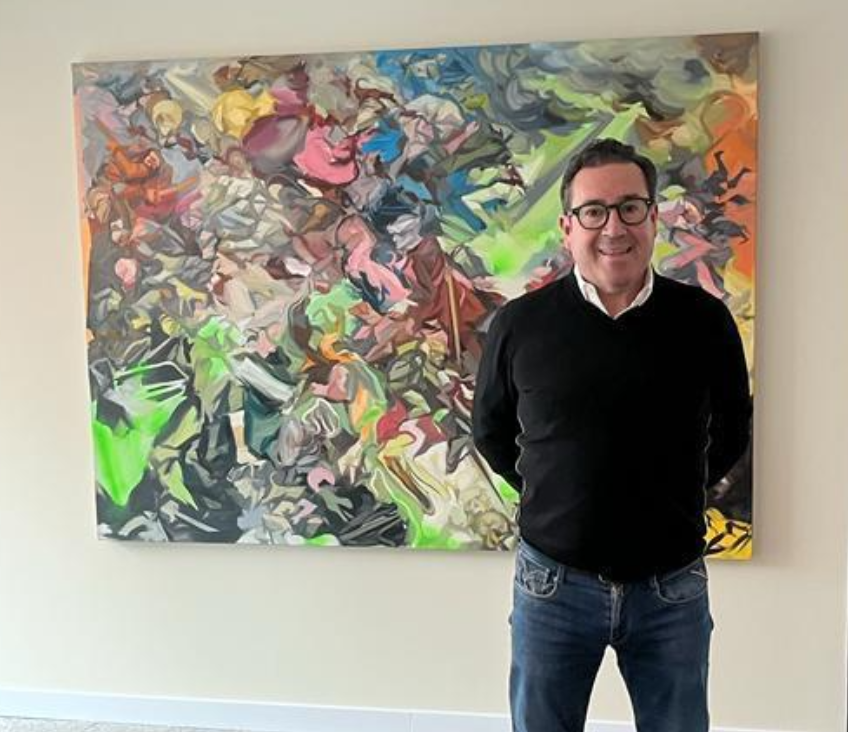
Manuel is a photographer involved in the horse world, as the story by Santiago Rodríguez tells us today explains. Santiago Rodríguez is also connected to Chacco in a way, through the world of horses.
An interesting read for this weekend. Hermès as an emblem, the equino as a pillar, as the foundation of everything.