



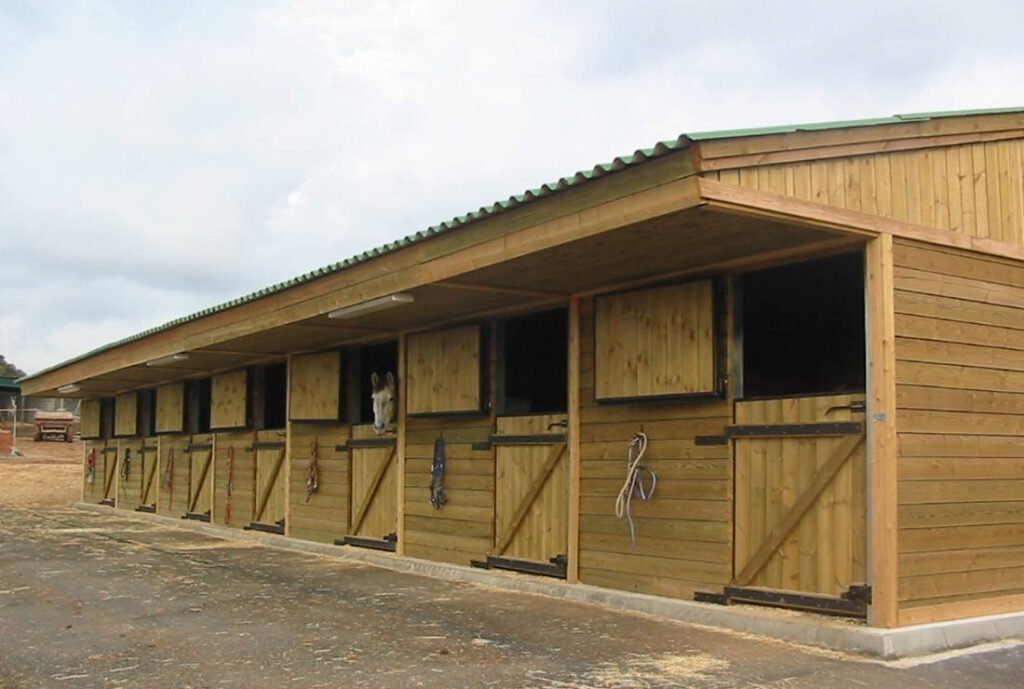
The well-being of horses depends not only on training, feeding, or daily care. The infrastructure of a stable also directly influences the comfort of the horses and the safety of daily work.
This is according to a recent analysis published by Swiss Equestrian together with Equistructure, which highlights three simple points that can make important differences in the daily operation of an equestrian facility.
The first is the condition of the flooring in high-traffic areas. Walkways, cleaning areas, showers, and stable entrances are spaces where slips occur most frequently. Proper flooring can help reduce falls, minor injuries, and stressful situations for horses. The article also points out that when a horse hesitates while walking or shows insecurity in certain areas, it is often not a behavioral problem, but rather a reaction to a surface it perceives as unstable.
Another key aspect is the door and latch system. In a stable, doors are constantly opening and closing throughout the day, so any mechanism that jams or malfunctions can become a hazard. Equistructure recommends opting for durable materials, reliable systems, and solutions that can be easily used even while wearing gloves. These small details make daily tasks easier, especially when working alone or with nervous horses.
Air quality and lighting complete the list of priorities. A facility may appear clean and well-maintained, but be uncomfortable if there is excessive humidity, dust, or poor ventilation. Good air circulation and adequate lighting promote a healthier environment for the horses and make the work more pleasant for riders and stable staff. Furthermore, whenever possible, natural light helps improve the overall feeling within the facilities.
The text also emphasizes that major renovations aren't always necessary to optimize a stable. Often, simply reviewing the most frequently used areas, such as walkways, stall entrances, or washing areas, is sufficient, as these have the most direct impact on the daily safety and comfort of both horses and staff.
More information at the following link here.