



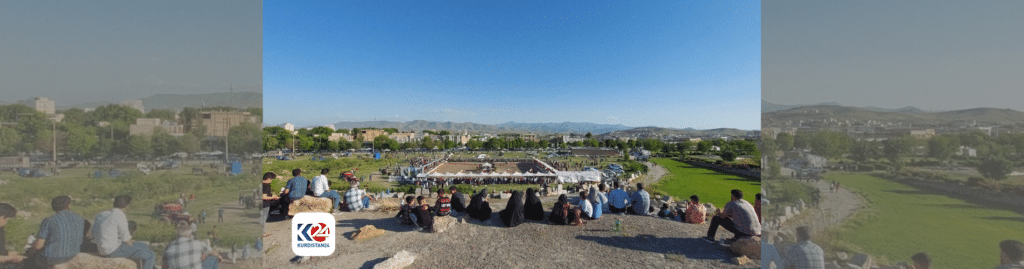
According to international historians, from Herodotus to the present day, the Kurdish horse is a unique breed: strong, resilient, thriving, and able to withstand harsh climatic conditions in mountainous regions. The Third Kurdish Horse Festival, which included competitions for 45 Kurdish horses, was held in the provinces of Hamadan, Sanandaj, and Anahita, in the city of Kengawar, in Kermanshah province, in northwestern Iran (Rojhilat), and in Khuzestan.
The festival highlighted the distinctive characteristics of the Kurdish horse, known for its short ears, muscular legs and hooves, and ability to move in groups and "dance." Historically, these horses were used for transportation and in battles.
There are three different types of Kurdish horses: Javi, Hewshari, and Sinjawi. The Javi, the most numerous, are either black or white. The Hewshari are darker, with a reddish hue called "Chwet," while the Sinjawi are lighter and known as "Sura-Chwet" or bluish.
The festival manager and riding instructor, Mahdi Gulbudaghi, says that Kurdish horses are fast, intelligent, and capable of withstanding harsh conditions in mountainous areas, making them unique in the world. Shaian Afrazi, a well-known rider, points out that the characteristics of Kurdish horses are not found in other equines, making them ideal participants for certain types of competitions.
The festival not only celebrates the skills and characteristics of these exceptional horses, but also highlights their cultural and historical importance in the Kurdish region.