



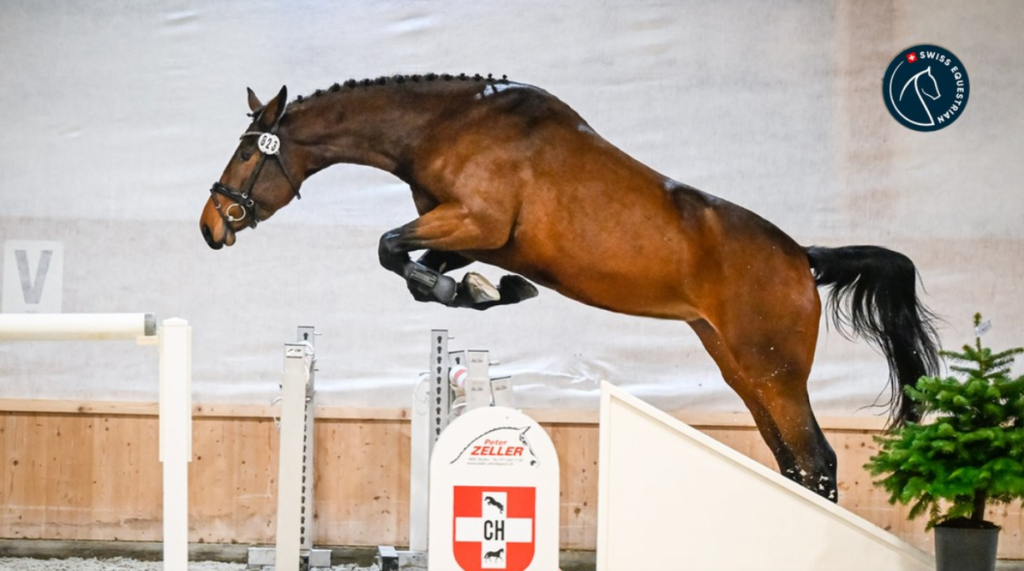
The quality of movement, jumping ability, temperament, and health are some of the fundamental aspects when assessing the potential of a young horse. However, what characteristics truly identify a good specimen, and how important is its training during the early years?
The Swiss Equestrian Federation has shared the reflections of Eva Lachat and Stefan Meierhans, two specialists who have addressed the main criteria for evaluating young horses, as well as the importance of respecting their physical and mental development times.
Eva Lachat, a specialist in gait assessment, considers it essential to observe the horse as a whole. The conformation of the neck, the topline, and overall body harmony are some of the elements she takes into account during her evaluations.
However, he cautions that spectacular movements are not enough to determine a horse's quality. Balance, stability, and especially a willingness to work are equally important. In this regard, he points out that there are many horses with great qualities that don't always demonstrate the necessary attitude to make the most of them.
Stefan Meierhans, a specialist in assessing show jumping ability, places particular emphasis on the horse's type and overall conformation. During free jumping, he focuses on the horse's technique, courage, prudence, and ability to interpret obstacles.
For Meierhans, a good show jumping horse needs more than just talent and reflexes. A willingness to work, a readiness to face challenges, and a competitive spirit are qualities that can also make a difference in its sporting future.
He also emphasizes the need to observe the horse in motion, since a static assessment does not allow one to appreciate all the characteristics that may influence its subsequent performance.
One aspect on which both specialists agree is the importance of adapting training to the individual needs of each horse. Young horses need time to develop both physically and mentally, so their training should be carried out gradually, without imposing demands they are not yet ready to meet.
Eva Lachat summarizes this philosophy with a particularly important idea: it is the horse itself that must determine the speed of its training.
These reflections, shared within the framework of the 2026 Swiss Breed Classic, highlight that the assessment of a young horse should not be limited to its sporting abilities. Its health, temperament, willingness to learn, and the quality of its training are equally important factors in fostering a long and successful sporting career.
At Chacco Info, we believe it is especially important to give visibility to these types of initiatives, which allow us to learn about the criteria of specialists and to remember the responsibility involved in working with young horses, respecting their abilities and needs at each stage of growth.