



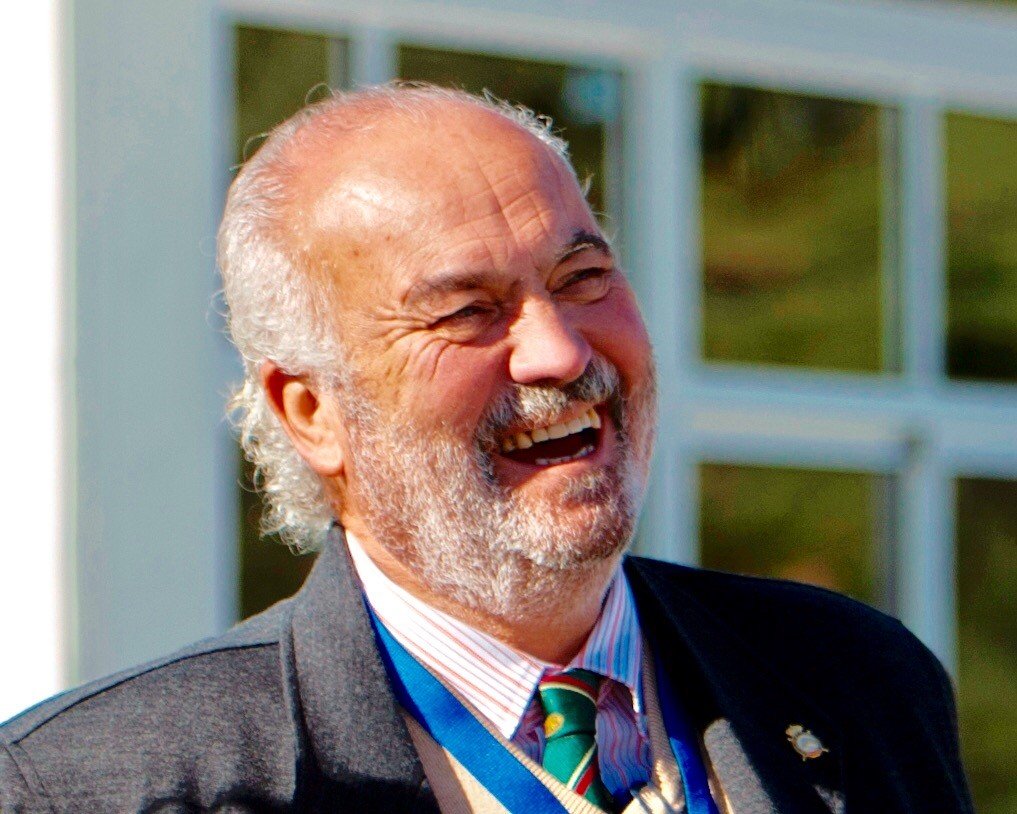
Francisco “Paco” Guerra Díaz, one of the most influential figures in Spanish dressage, has announced his retirement from competition after fifty-three years of uninterrupted activity. His message, published on social media, has moved the industry with its honest explanation that his physical condition no longer allows him to keep pace with the rhythm his mind and passion still yearn to maintain. After much deliberation, he states, he has decided to leave his great passion and attend competitions only as a spectator, convinced that this is the most honest way to avoid interfering with the work of riders, trainers, and organizing committees. He thanks those who have supported him for decades, apologizes for any mistakes he may have made, and sends a special greeting to riders, breeders, trainers, and, above all, his fellow judges, whom he encourages to continue striving for better dressage and for new successes.
His retirement marks the end of a career that has left a profound mark on the sport. Paco Guerra was the first Spanish judge to reach FEI Category 5, the highest international rank in dressage, a milestone he achieved in 2017 that put Spain on the map of countries with leading judges. His career began much earlier: he started as a regional judge in Barcelona in 1972 and obtained the national judge category in 1976. In 1988, he was promoted to FEI Category 4 judge, which allowed him to judge in Europe, the United States, and South America, consolidating a reputation based on rigor, consistency, and professionalism.
In addition to his work on the track, Guerra played a key role in sports organization. He was Director of Equestrian Sports at the Real Club de Polo de Barcelona during the 1992 Olympic Games, an event that marked a turning point in the international standing of Spanish equestrian sport. In 2009, he assumed the technical direction of the Catalan Equestrian Federation, a position he held for over a decade, contributing to the modernization of its structures, processes, and equipment. His versatility also led him to serve as a judge in Show Jumping, Eventing, Endurance Riding, TREC, and Hunter, as well as a course designer in various disciplines—a rare profile that reflects his broad knowledge of the sport.
His retirement is not only the end of a personal chapter, but also a symbolic moment for Spanish sport, which bids farewell to a judge but retains a leading figure. Dressage loses an authoritative voice in the arena, but gains a privileged observer from the stands, someone who will continue watching and supporting those who carry on the path he helped to forge.