



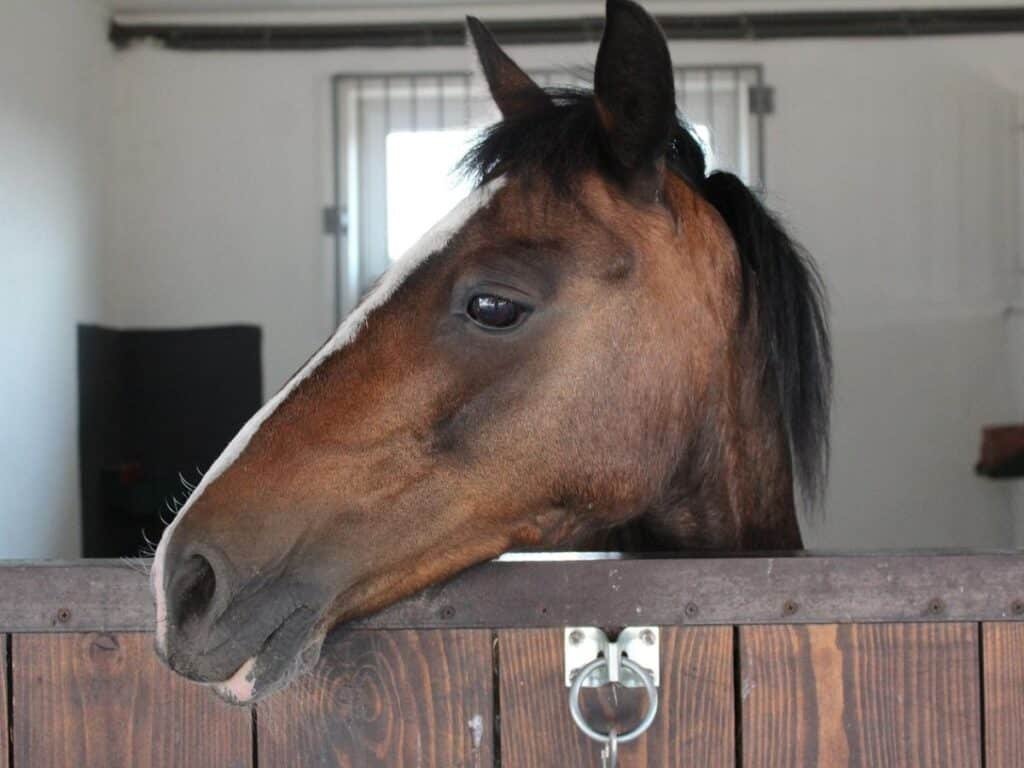
Occasionally, some horses, especially those that spend many hours in the stable or paddock, may develop repetitive behaviors that are often referred to as stereotypies or stereotypical behaviors.
These are abnormal and repetitive behaviors that can arise for various reasons. Although they don't always have a clear cause, they are often related to stress and anxiety.
These behaviors are not usually observed in horses living in the wild, which suggests a sign of a problem.
Among the most common stereotypies are:
- Biting doors, bars, or other objects in the stable.
- To rock your head from side to side.
- Walking in circles inside the box.
It's important to remember that horses are prey animals, and in the wild they tend to hide signs of pain or discomfort to avoid appearing weak. Often, for this reason, it's difficult to perceive everything they're trying to tell us, and early detection of physical or emotional problems can be challenging.
Therefore, paying attention to these types of behaviors is of great importance. Detecting them early can be the first step in making adjustments to their handling, environment, or daily routine, thus contributing to their overall well-being.