



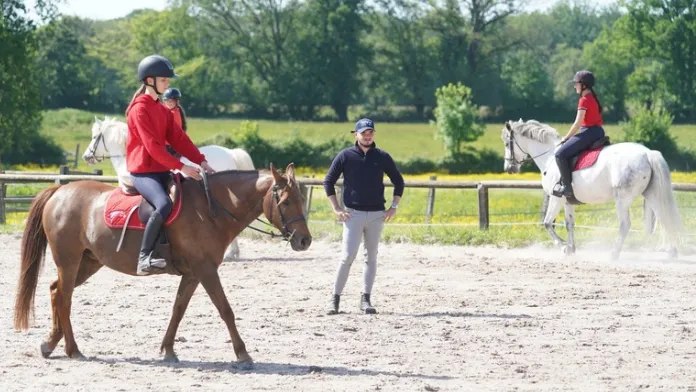
The first few weeks of the course can lead some students to reconsider their chosen training. In response, the French Equestrian Federation (FFE) highlights equestrian trades as an alternative for those seeking practical learning, linked to working with horses and interacting with people.
The proposal presents three pathways within the French training system: riding instructor, equestrian tourism guide, and riding instructor. Each corresponds to different functions and requirements, although all allow for gaining practical experience and developing skills related to communication, organization, autonomy, and responsibility.
The FFE reminds us that choosing a career path at 18 or 20 doesn't necessarily determine one's entire working life. Interests change, and experiences help define new goals. Therefore, reconsidering one's studies at the beginning of the academic year can be an opportunity to start a new chapter, provided that the entry requirements and the possibilities for joining a training program are taken into account.
One of the first entry points is the French title of Animateur Équitation (AE). This professional welcomes riders, participates in discovery and introductory activities, and assists in the care of ponies and horses under the supervision of an instructor. According to information released by the federation, training is available from Galop 6, or Galop 5 when undertaken through an apprenticeship contract.
Another option is the Equestrian Tourism Guide (ATE), geared towards those who want to develop their skills in the outdoors. Their responsibilities include preparing and leading horseback rides and trails, designing equestrian tourism itineraries, and sharing information about the local flora, fauna, and heritage. Group management and safety are part of their daily work. To qualify, the FFE requires a Galop 6 level and some prior experience on equestrian trails.
In the field of education, the federation highlights the BPJEPS with a specialization in horsemanship, a level 4 French state diploma that serves as a benchmark for instructor training. Admission requires passing technical tests both mounted and on the ground. These professionals can teach independently, plan sessions, participate in center projects, and undertake tasks related to the care and maintenance of horses.
Experience can also pave the way for specialization, training other professionals, or managing equestrian centers. The FFE thus emphasizes that these occupations allow individuals to build a career path that evolves with acquired skills and new responsibilities.
For students interested in changing their career path during this academic year, the recommendation is to first identify the profession that best suits their goals and contact a training center. There, they can assess their skill level, learn about the requirements, and explore employment opportunities, taking the first step toward their professional future in the equestrian sector.