



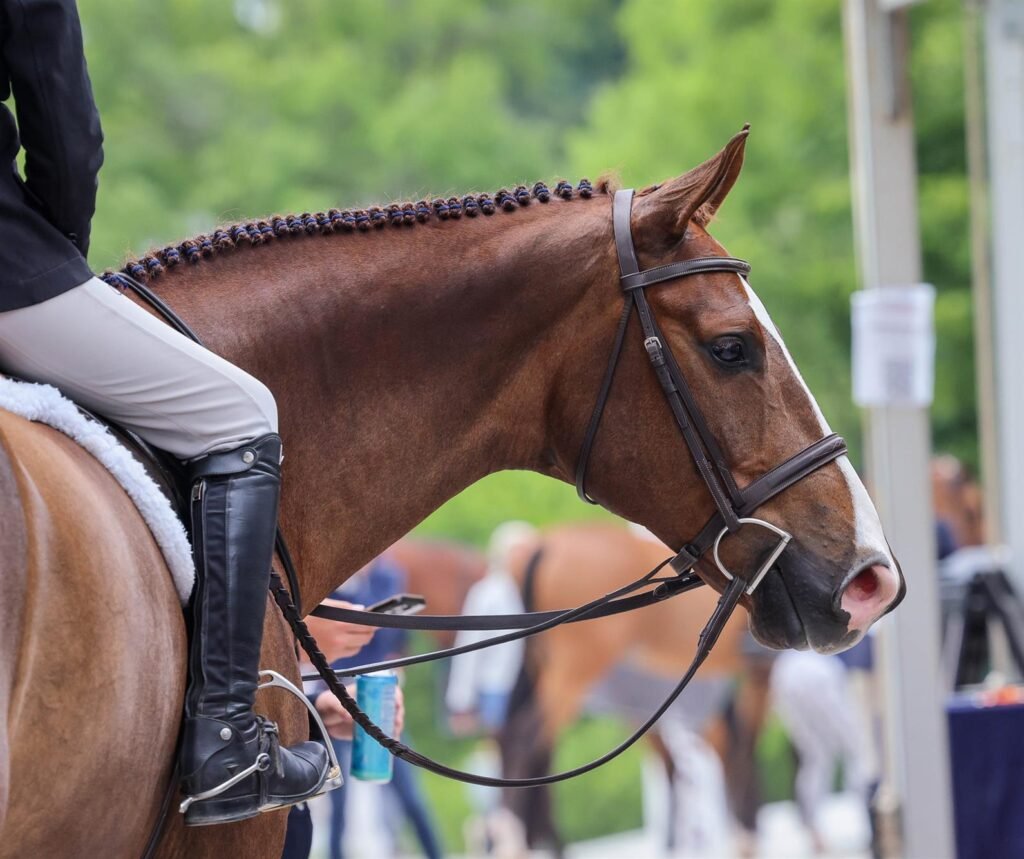
The United States Equestrian Federation (USEF) will implement, starting December 1, 2026, a new protocol to assess the physical condition of participants before allowing them to ride again after suffering a fall during a competition.
The amendment to standard GR848.1 aims to improve the safety of riders and horses by preventing adrenaline and the initial absence of pain from leading to a premature return to riding. Until now, the ingrained idea of "getting back on the horse" immediately after a fall could override a proper assessment of the potential consequences.
Medical evaluation will be mandatory for participants under 18 who fall, as well as for adult participants, unless the latter land on their feet. Adults who fall more than once during the same competition, even if they land on their feet, will also be required to undergo evaluation.
Before returning to competition or riding a horse—or animal-drawn vehicle—against those affected must be examined by the event's qualified medical staff, a doctor, a medical assistant, or a nursing professional.
To standardize these controls, the USEF Human and Equine Safety and Welfare Committee is developing a specific assessment that will be available in both digital and paper formats. It will be a one-page checklist designed to identify warning signs that would prevent continued safe competition.
These will include symptoms consistent with a concussion and signs of fractures, sprains or joint dislocations, as well as any injury that limits the participant's ability to ride or that may worsen if they suffer another fall.
If symptoms of concussion are detected, the affected individual will be placed on the Federation's medical ineligibility list and will not be allowed to compete again until they pass a new examination and submit the corresponding medical certificate of return to competition. In the case of other signs of possible injury, further evaluation will be recommended, although the participant will not automatically be placed on the list.
Katlynn Wilbers, USEF's Director of Competition Operations, acknowledges that this measure will bring about a cultural shift within equestrian sport, but insists that its purpose is to allow a few minutes to check if the person is truly in good enough physical condition to ride again.
The USEF has also indicated that the application of the new procedure may initially vary between disciplines, breeds, venues, and organizations, and will therefore maintain an open channel for receiving feedback during its implementation. With this new regulation, the USEF prioritizes prevention and medical assessment over the pressure to return to competition immediately.