



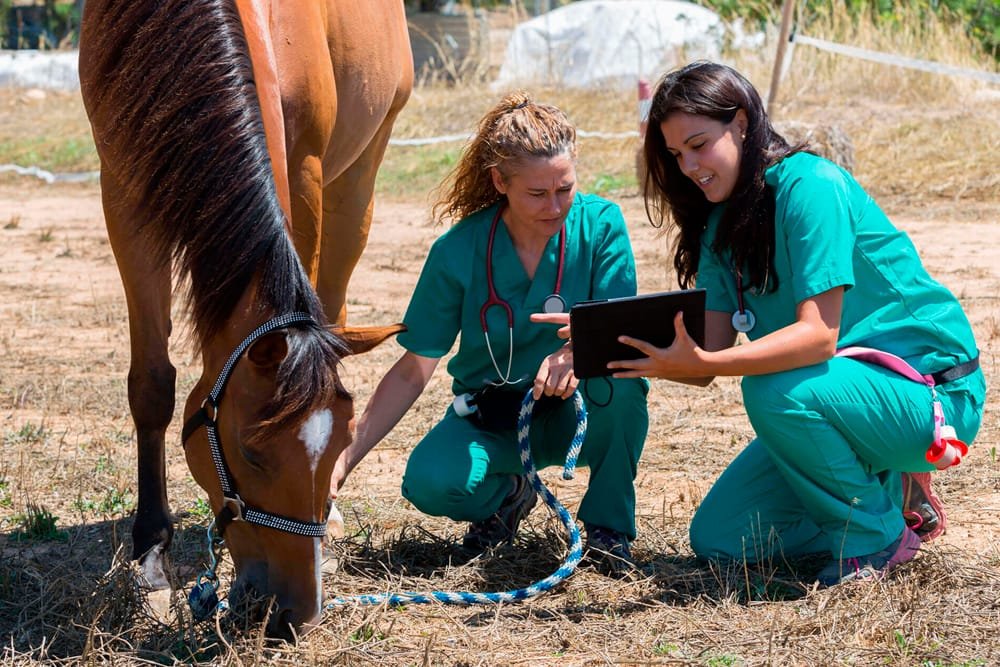
Specifically, it is the CEPEF4 study, which analyzed data from nearly 50.000 general anesthesias performed on horses from veterinary hospitals in 28 countries. While it is true that mortality has decreased—from 1,9% in 2002 to 1,2% currently—it is still a high figure.
The study involved scientists as important as the Professor of Anesthesiology at the Faculty of Veterinary Medicine of the CEU Cardenal Herrera University, as well as José Ignacio Redondo and Professor Luis Doménech from the Department of Mathematics, Physics and Technological Sciences.
Launched in 2020, the study has finally released its first data, which involved 47.396 horses, 616 donkeys, and 56 mules from 93 veterinary hospitals and clinics across four continents. The results showed a decrease in equine deaths due to anesthesia compared to previous years, although the rate is higher than in other domestic animals such as cats, where the mortality rate is around 0,63%.
One of the points of reflection was colic, a leading cause of death in horses. The study revealed that perioperative care and specific monitoring can reduce mortality.
They also found that central nervous system problems, abdominal complications, or fractures during recovery from anesthesia are other causes that increase the mortality rate, which is compounded by the fact that they often deal with pregnant mares, very thin horses, and older horses.
We expect the death rate to continue to decline in the coming decades.