



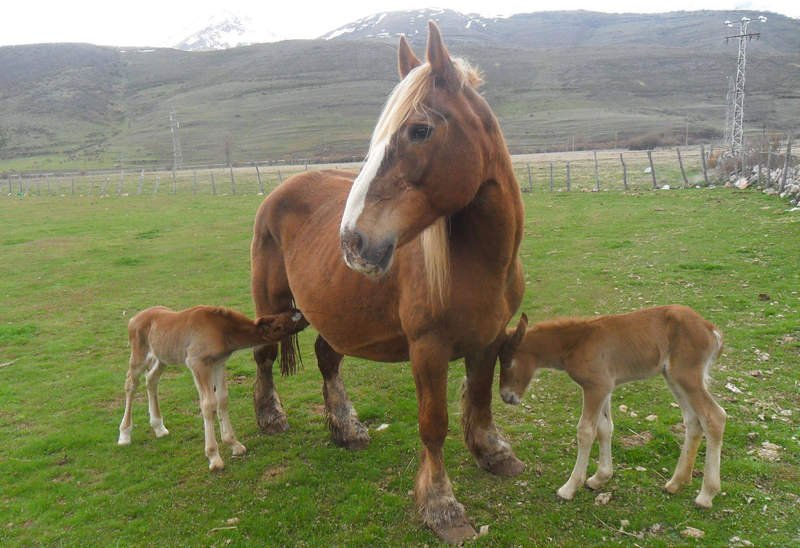
The birth of a foal is always a special moment. However, when a mare successfully raises two healthy twin foals, it is even more remarkable. In the equine world, twin pregnancies are very rare and are considered high-risk.
Unlike other species, the mare's uterus is not designed to carry more than one fetus. Therefore, when a twin pregnancy is detected, the situation requires very close monitoring from the earliest stages. In clinical practice, it is not considered a reproductive peculiarity, but rather a pathology that can jeopardize both the lives of the foals and the health and future fertility of the mare.
The image of two foals resting beside their mother may seem like a peaceful and happy scene, but behind every birth there is usually a great deal of work, vigilance, and experience. The survival rate for both foals is very low in these types of pregnancies, and it is estimated that the chances of both reaching full term and being born alive are less than 10%.
One of the main risks is miscarriage. Twin pregnancies are one of the most common causes of miscarriage. Lack of space and nutrients can lead to placental insufficiency, causing most twins to be lost between eight and nine months of gestation.
Even after the foals are born, the complications don't end there. They are often smaller than normal, may experience growth delays, and require constant care during the first few days of life. Proper feeding, veterinary supervision, and monitoring of the mother are crucial for both of them to thrive.
Birth is also a delicate moment. In a twin pregnancy, there is a greater risk of dystocia, or difficult birth, since both foals may try to position themselves or be born at the same time. This situation can lead to serious complications.
That's why every successful birth of twin foals is considered exceptional. Not only because of the tender image of two little ones discovering the world with their mother, but also because it represents the culmination of a very complex gestation and careful management.
In cases like this, the work doesn't end with the foaling. During the first few weeks, the foals need frequent checkups to ensure they are nursing properly, gaining weight, and developing well. The mare, for her part, must also be monitored to ensure she recovers well and can care for both foals without compromising her own health.
The birth of twins in horses is a reminder of the most delicate aspect of equine breeding. It's a moving sight, but also a situation that demands knowledge, prudence, and responsibility. When all goes well, the arrival of two healthy foals becomes a rare exception in nature and a source of immense joy for those who work closely with horses.