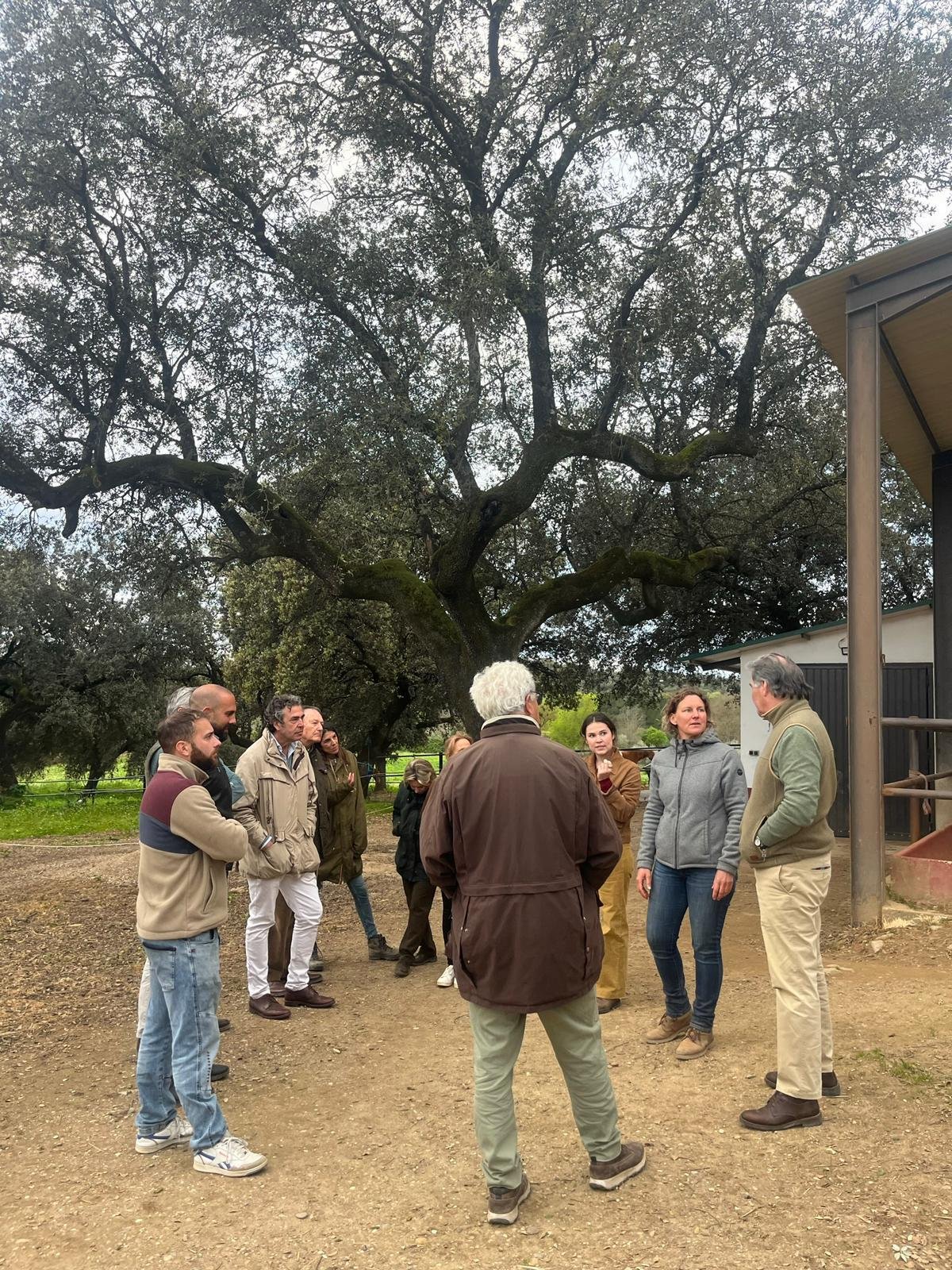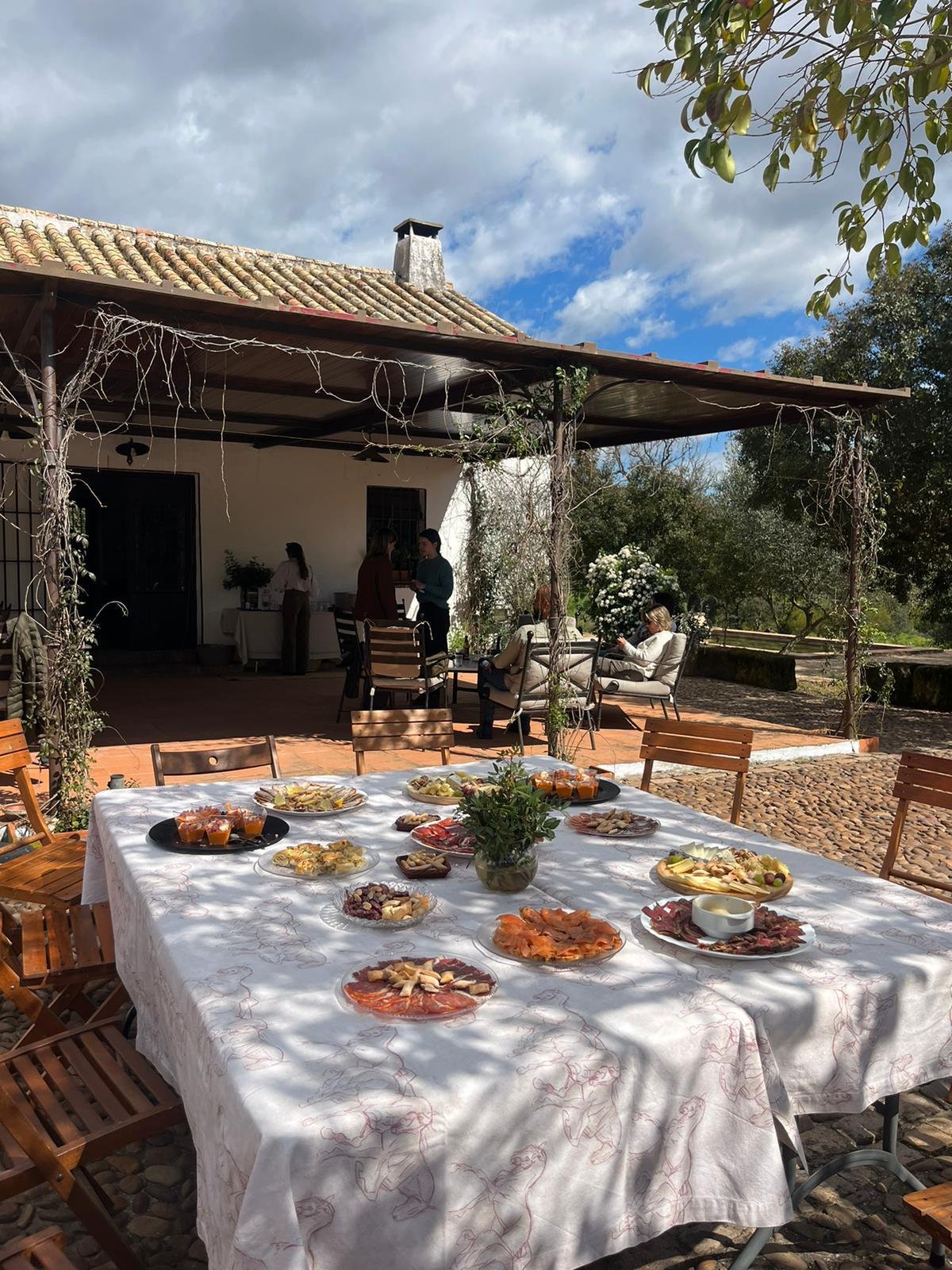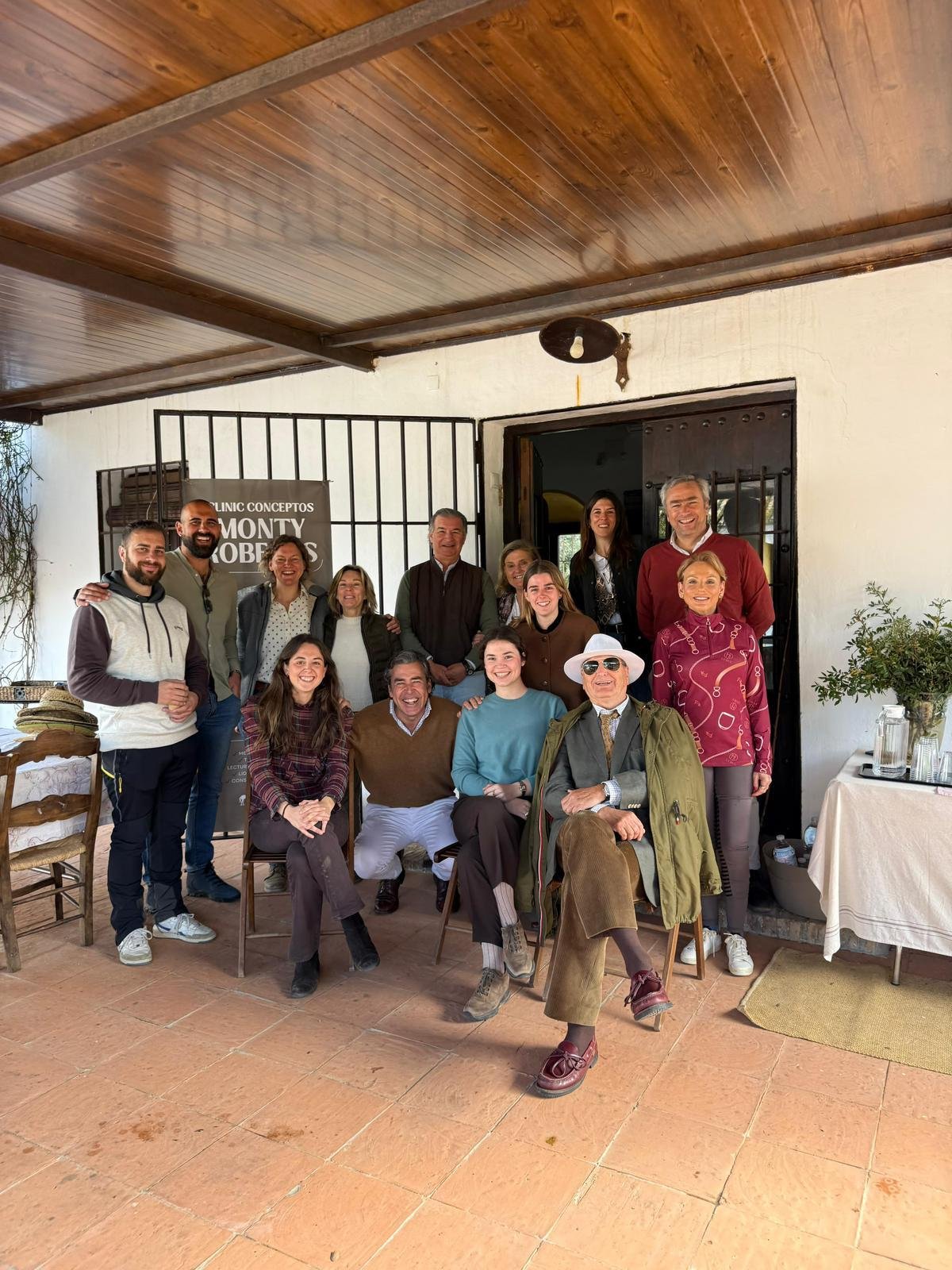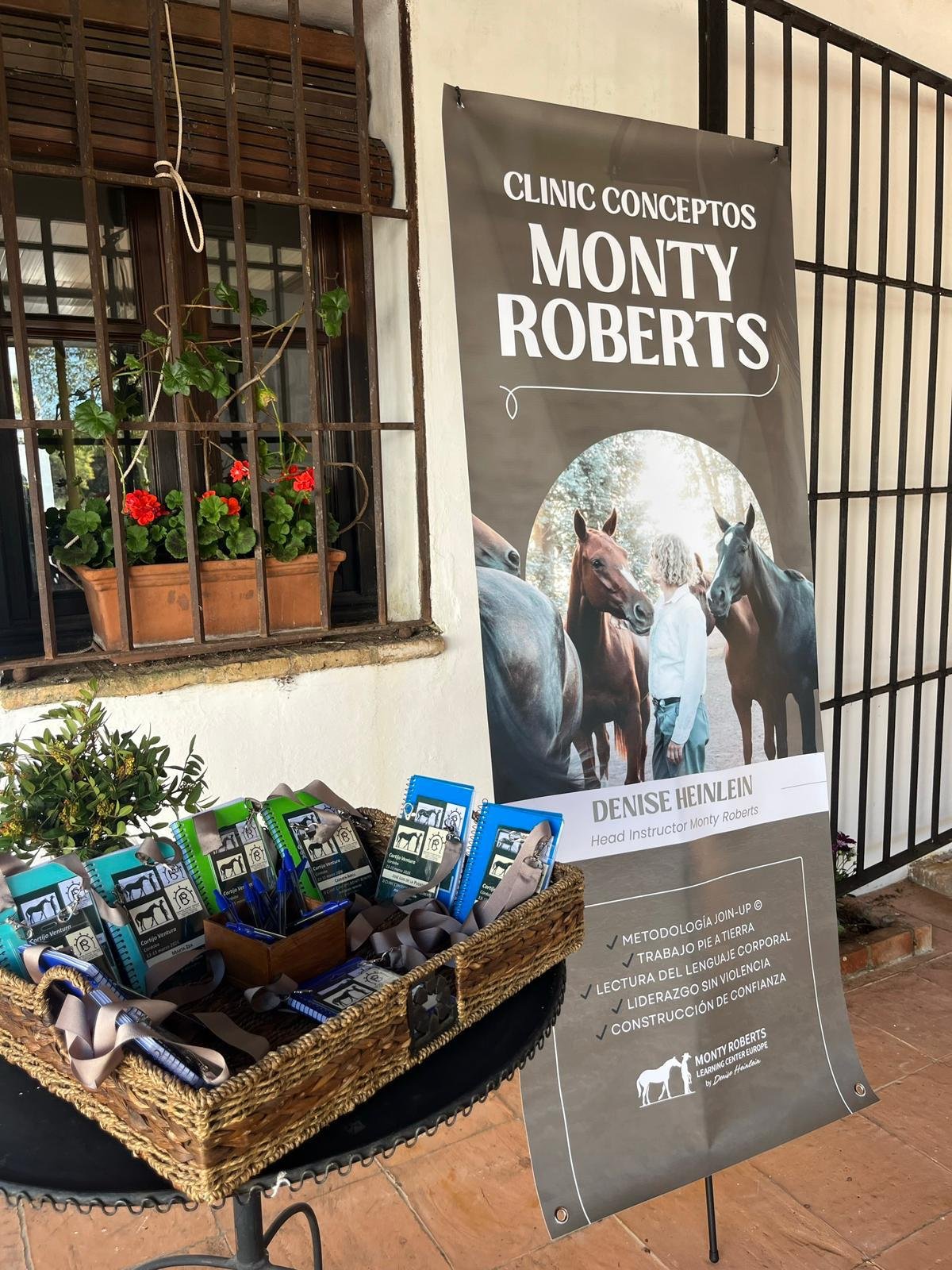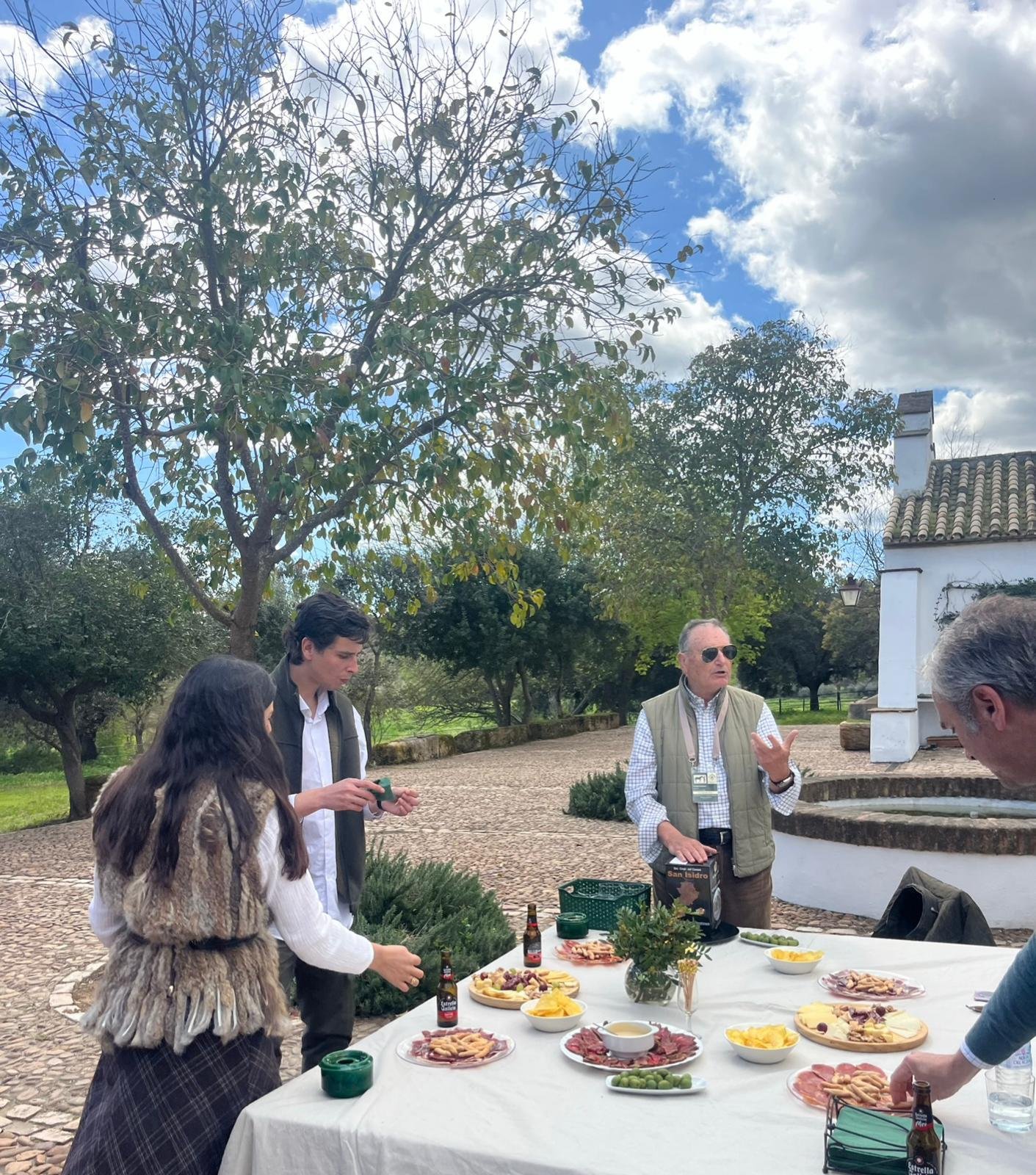



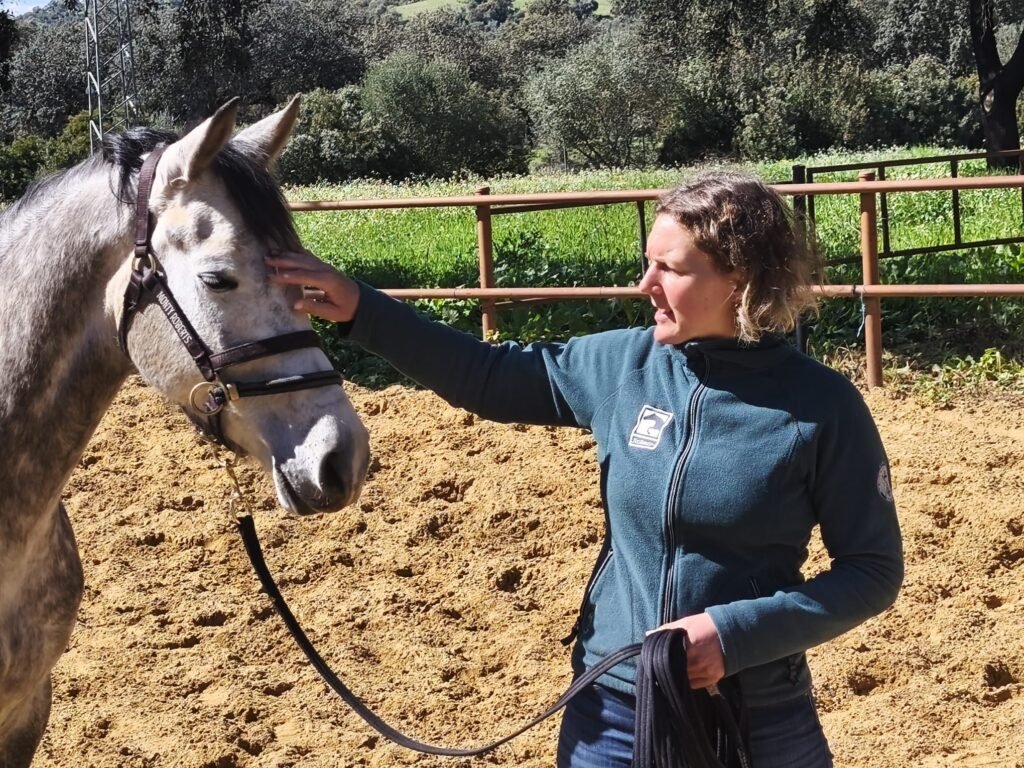
From March 13th to 15th, Cortijo Ventura (Posadas, Córdoba) was a unique meeting point within the national equestrian scene. Far from the competition arena, stopwatches, or dressage, the focus was on the relationship between horse and human.
The second Monty Roberts Concepts Clinic, organized by Ángela Ortiz and instructor Denise Heinlein (Monty Roberts's right-hand woman), has concluded with overwhelmingly positive results. This is due not only to the high level of participation but also to the real impact it has had.
“People went home with huge smiles on their faces, super motivated and with their hearts full,” Ángela summarizes. But there’s something even more important: “everyone said it had changed the way they saw horses.”
That is the core of the Monty Roberts methodology: understanding how the horse thinks.
“We often forget, but horses are prey animals. It all starts there,” Ángela explains. From that premise, the work shifts from imposing its will to focusing on cooperation.
It's not about the horse obeying because it's forced, but about it wanting to be with you, trusting you, and choosing to cooperate. This change in approach has been a game-changer for many participants.
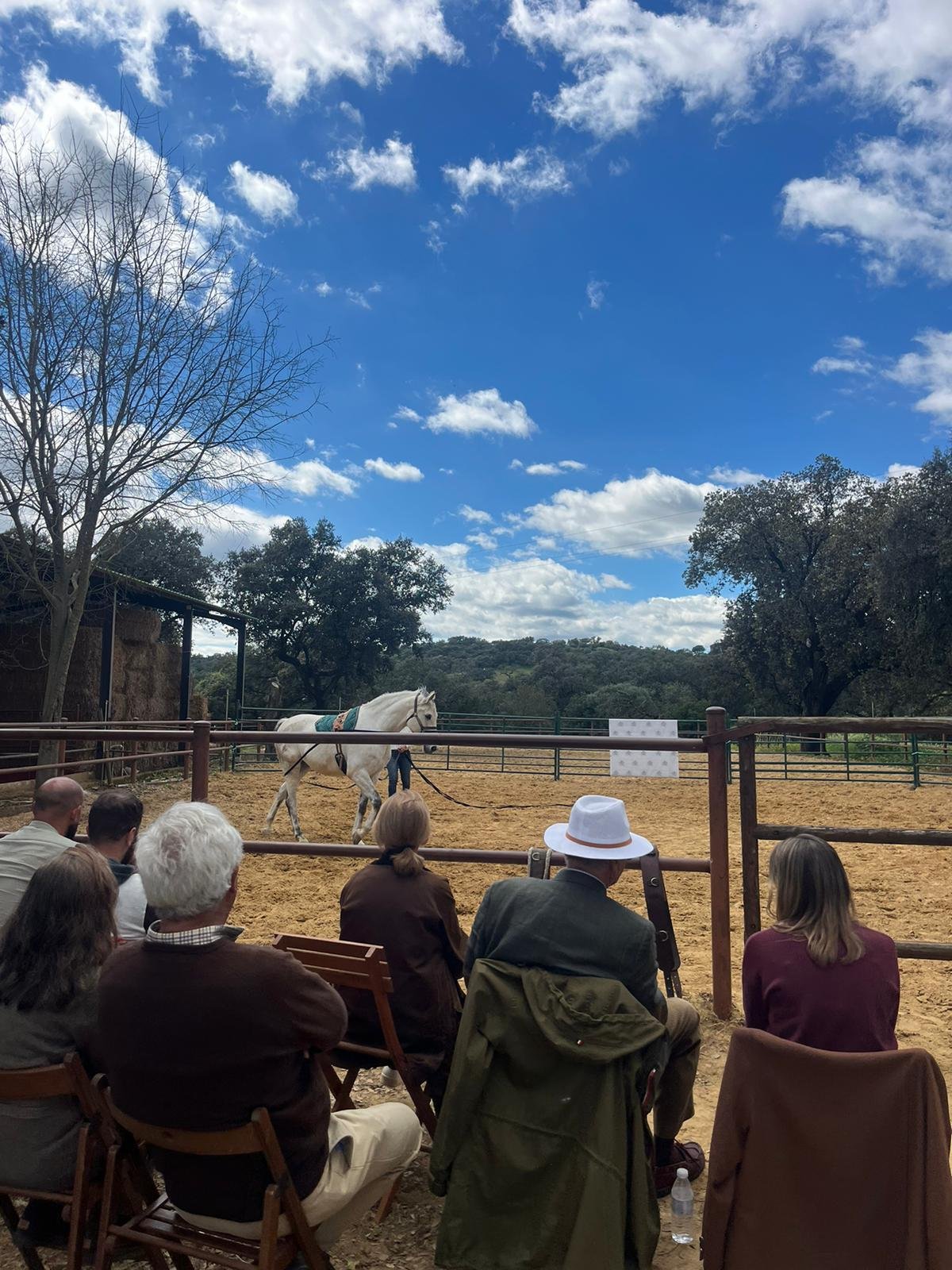
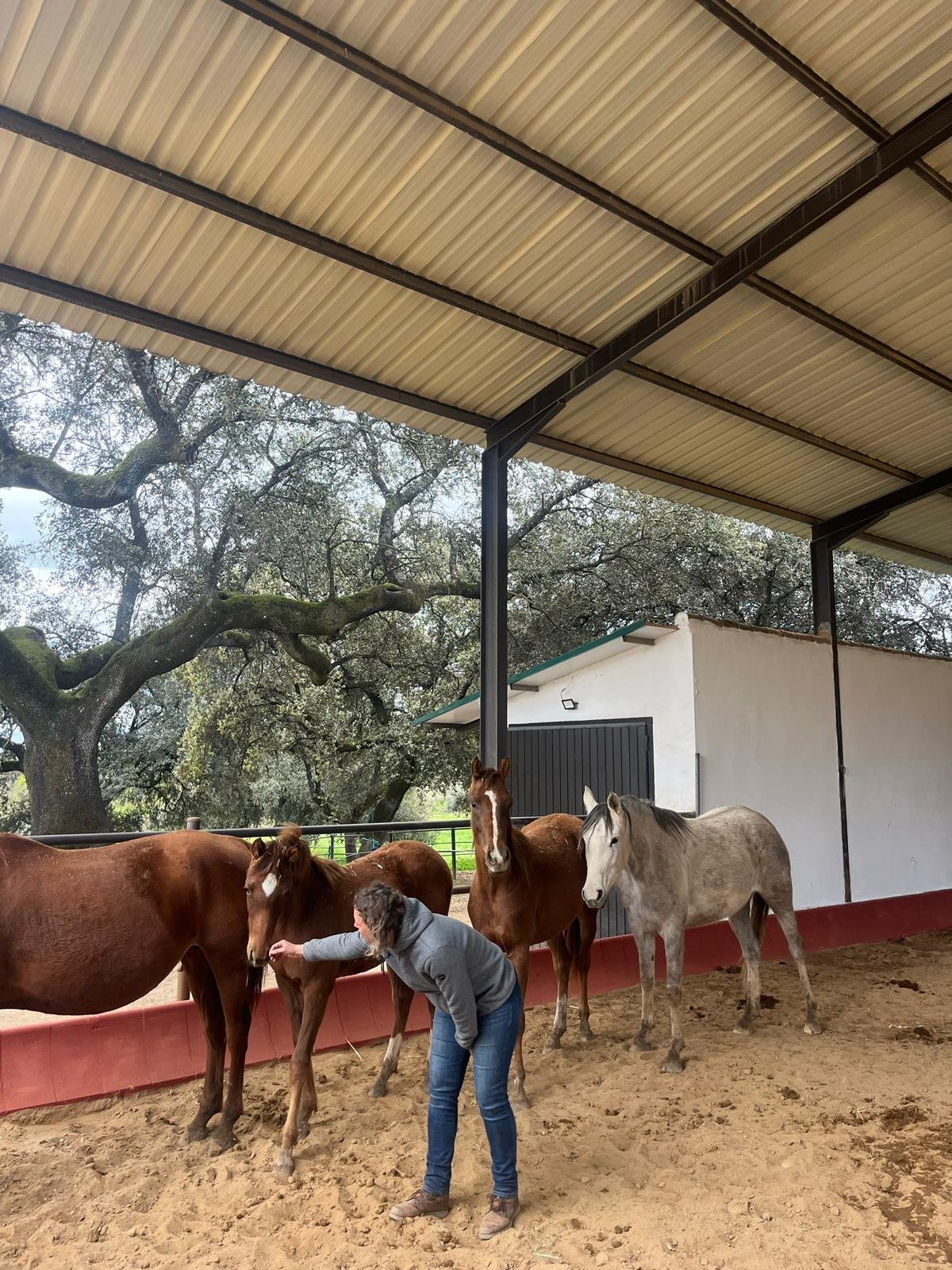
The clinic combined theoretical sessions in the morning with an intense practical part in the afternoon, where the method could be seen in action with horses of different ages and profiles.
From yearling colts being handled for the first time to more mature horses working on long reins, an important phase before getting into the saddle.
“Working from the bottom up is fundamental for the horse to understand the aids, especially the voice, and to associate everything before there is any weight on top,” explains the organizer.
But one of the most striking moments was the Join-Up®, the foundation of the method. It's an exercise where, through body language, the horse ends up following the person without the need for pressure, food, or any other tricks.
“She does it with incredible ease… and you see how the horse relaxes, how it changes,” Angela comments.
Beyond theory, the clinic also focused on real-life, everyday situations. One of the clearest examples was working with a horse that had never been in a trailer before.
“We did it without any scares, without any bumps… and in the end, he was going in and out on his own. We repeated it several times and the change was incredible,” he says.
The group was made up of diverse backgrounds: industry professionals, amateur riders, students, breeders… even farriers.
Among those present were Yeguada Sierra Gorda, Yeguada Valbuena, two professionals from the Manuel de la Rosa School, Zea Arabians…
“They, who work with horses with a lot of blood, were blown away. They couldn't wait to get home and try everything,” Ángela explains.
There were also profiles more closely linked to competition, such as a female rider who trains with Juan Manuel de Jove, or fans who simply wanted to better understand the horse.
And they all agreed on the same thing: the impact of what they had learned.
The event took place on a farm where traditionally they work in Doma Vaquera, a system that, in its beginnings, relies more on the submission of the horse.
In contrast, the Monty Roberts method proposes just the opposite: cooperation, time, and understanding.
“It has been very curious, because people very involved in Doma Vaquera have been watching the clinic and saying: 'she's right... the problem is that we don't have patience',” says Ángela.
A contrast that, far from generating rejection, opened new perspectives.
“I think we’ve convinced a strong core group,” he adds, laughing.
The atmosphere during the three days was, according to the organizers, exceptional. So much so that the owners of the estate themselves asked the team to stay longer.
“All the horses were completely relaxed. It was incredible to see,” Ángela concludes.