



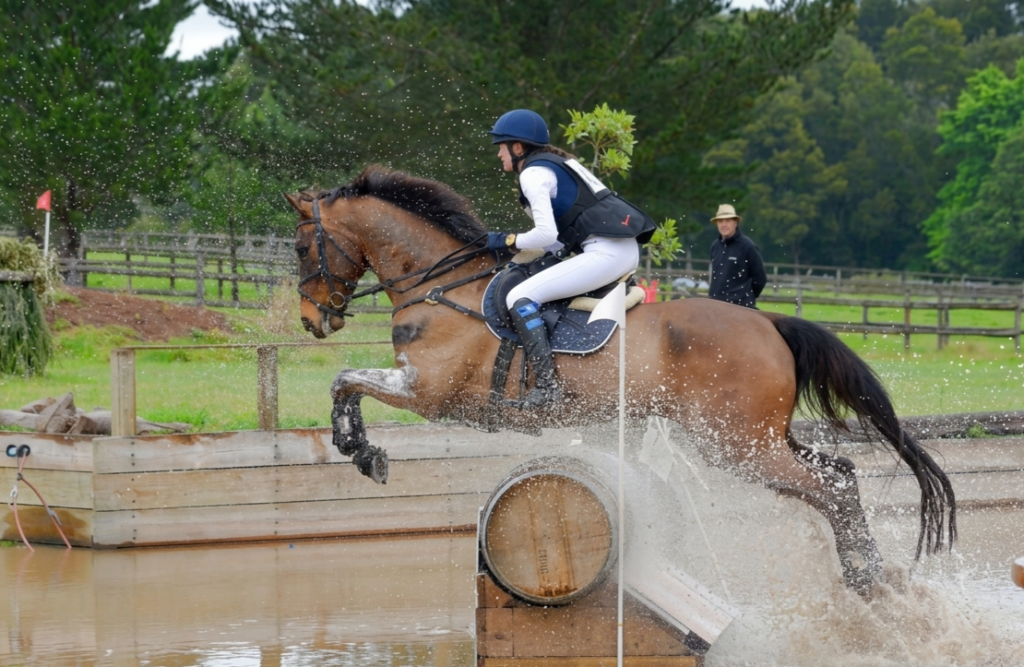
In equestrian disciplines, one of the most delicate moments can occur when the horse faces water and shows insecurity.
Whether in Show Jumping, Eventing, or even during a simple trail ride, puddles, rivers, or wet areas can become a challenge if the horse lacks confidence.
Understanding the origin of that fear is the first step to managing it with sound judgment and patience.
Horses, being prey animals by nature, interpret many unfamiliar stimuli as potential threats. The reflection in the water, its movement, or even the sound it makes when stepped on can create uncertainty. This isn't disobedience, but instinct.
Therefore, the rider must approach the situation calmly, avoiding tensions that only increase the perception of danger.
Before attempting to cross, it's important to allow the horse to observe the water from a distance. Giving it time to assess its surroundings, sniff, and approach gradually helps reduce its alertness. Forcing it into the water abruptly often has the opposite effect: resistance, backing up, or even more intense reactions.
Groundwork can be a very useful tool. Guiding the horse from the ground to the water, while maintaining a relaxed attitude, helps it understand that there is no risk. Once it has had a positive experience without a rider, it will be easier to repeat the exercise under saddle.
When riding, the key is to maintain a consistent and confident attitude. Looking ahead, maintaining a soft contact with the reins, and using smooth leg movements conveys confidence. The horse senses any hesitation from the rider, so clarity in the aids is essential.
It's also advisable to start with small steps, such as crossing shallow puddles before tackling more complex areas. Gradual progression promotes learning and prevents getting stuck. Rewarding every step forward, however small, helps the horse associate water with a positive experience.
In disciplines like Eventing, where water obstacles are common, this type of training is essential. However, even in Dressage or recreational riding, overcoming this fear improves the safety and confidence of the horse and rider in any environment.
Patience, consistency, and empathy are your best allies in this process. Every horse has its own pace, and respecting that makes all the difference between a negative experience and lasting learning.